
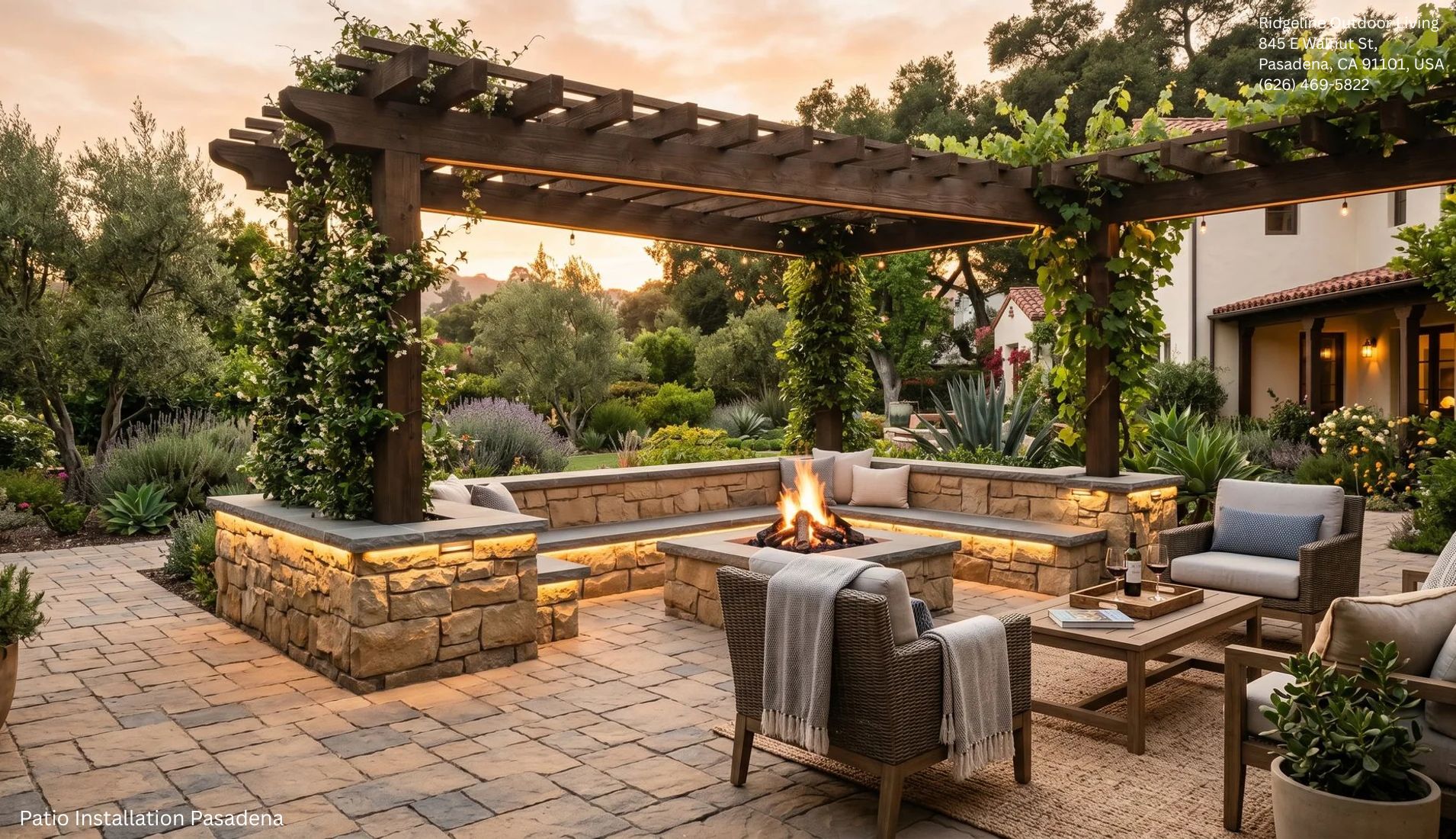
The Ultimate Guide to Hardscaping in Glendale, CA: Designing Around Glendale Water-Saving Practices
Hardscaping in Glendale is not just a matter of choosing pavers, gravel, walls, and patios that look good under Southern California light. It is a practical response to the way water, heat, maintenance, slopes, and planting all meet on a real property. A successful Glendale landscape does not treat hardscape as decoration around plants. It uses hardscape to shape how water moves, where people gather, how much irrigation the site needs, and how comfortably the space performs through hot summers and mild winters.
Glendale’s own water-saving guidance points homeowners toward California-friendly and California native plants because they fit the local climate and can reduce outdoor watering, water bills, pesticide use, and maintenance. That same logic applies to hardscaping. A patio that sheds water into a planting bed, a gravel courtyard that stays permeable, a path that replaces a thirsty strip of turf, or a seating area framed by drought tolerant landscaping can make the entire property easier to live with.
The key is restraint and planning. Too much paving can create heat, glare, runoff, and a stiff yard that feels disconnected from the house. Too little structure can leave a landscape dependent on lawn care, frequent watering, and weekly upkeep. The best projects usually land somewhere in the middle, with durable surfaces where they are useful and water wise landscaping where plants can do the work of cooling, softening, filtering, and adding seasonal interest.
Glendale’s water reality should shape the design from the first sketch
Glendale Water & Power has emphasized that a lot of the city’s potable water is used for landscaping. That single fact changes the way a responsible designer should approach a yard. Outdoor water savings are not a small finishing touch. They are central to landscape planning in the city.
For many older properties, the biggest water user is not an exotic garden. It is ordinary turf. Glendale promotes replacing turf with water-efficient plants and notes that turf needs weekly care. In its turf-replacement messaging, the city says native plants can survive drought with about 20 gallons of water per month. That figure should make any homeowner pause before investing again in a broad lawn that needs mowing, edging, fertilizing, irrigation monitoring, and regular repair.
Hardscaping becomes useful here because it can reduce the area that must be irrigated without making the yard feel barren. A front walk can widen into a small sitting terrace. A side yard can become a permeable gravel passage instead of a struggling lawn strip. A backyard patio can provide usable square footage while planted edges carry the visual softness. The goal is not to pave over the landscape. The goal is to stop asking plants to perform jobs that stone, decomposed granite, pavers, or decorative rock can handle better.
Glendale’s single-family landscaping guidance also points in this direction by encouraging native or drought-tolerant landscaping and site design that maximizes water permeability by reducing paved areas. That may sound contradictory at first: use hardscape, but reduce paved areas. In practice, it means using hardscape carefully, favoring permeable or semi-permeable surfaces where appropriate, and avoiding large impervious slabs that send water away instead of letting it move into the ground.
Hardscape is the framework, not the whole landscape
When people search for landscaping ideas, they often collect images of finished patios, fire features, gravel gardens, and modern landscaping with crisp concrete bands. Images can help, but they rarely show the hidden decisions that make a project successful: grading, drainage, soil preparation, irrigation systems, plant spacing, mulch depth, and the relationship between sun exposure and material choice.
In Glendale, a hardscape plan should start with use. How do people move from the driveway to the front door? Where does the afternoon sun hit hardest? Is the backyard for dining, children, quiet evenings, or low maintenance landscaping that looks composed even when no one has touched it for two weeks? Is the front yard meant to improve curb appeal, reduce water use, or both?
Once those questions are answered, materials can be chosen with purpose. Pavers may make sense for a frequently used patio or entry walk. Gravel landscaping may work better in a side yard, around drought tolerant plants, or in a modern courtyard where drainage and simplicity matter. Decorative rock can define dry stream effects, cover exposed soil, or support a xeriscaping approach, but it needs careful placement. Used too broadly, rock can make a yard feel hot and lifeless. Used as a texture among plants and mulch, it can be handsome and practical.
A common mistake in landscape renovation is treating hardscape as a way to avoid maintenance entirely. No exterior surface is maintenance-free. Gravel migrates, weeds find joints, mulch decomposes, irrigation lines need checking, and paved areas collect dust and leaves. The advantage of a well-designed water wise landscape is that maintenance becomes more predictable. Instead of weekly lawn care across the entire property, the homeowner may be sweeping patios, refreshing mulch seasonally, checking drip emitters, and pruning native California plants at the right time.
Designing around water instead of fighting it
Good hardscaping starts with water movement. Even in a dry climate, rain matters. Glendale encourages rainwater use through rain barrels as a way to conserve water for gardens and trees. That guidance fits neatly with hardscape design because roofs, patios, paths, and driveways all influence where rain goes.
A patio should not push runoff toward the house. A walkway should not trap water against a foundation. A gravel area should not become a sediment basin. These are basic principles, but they are easy to miss when the focus stays on surface appearance.
Permeability is one of the most important ideas in Glendale hardscaping. The city’s guidance for single-family areas says site design should maximize water permeability by reducing paved areas. A homeowner does not have to interpret that as a ban on beautiful outdoor rooms. It means every paved decision should earn its place. If a surface is needed for dining chairs, accessible movement, trash bin access, or daily circulation, make it durable. If a surface is mostly visual, consider gravel, planting, mulch, or a combination that lets water move into the soil.
The difference shows up during both rain and heat. Permeable gravel or planted zones can receive water from nearby hardscape. Mulched planting beds can hold moisture longer and support healthier roots. Glendale’s water-saving tips specifically landscape design Glendale include adding mulch, and in practice mulch is one of the least glamorous but most valuable materials in a drought tolerant garden. It reduces evaporation, moderates soil temperature, and keeps bare ground from crusting.
Choosing materials for Glendale yards
Material selection is where design taste meets local performance. The best choice for a shaded courtyard may be wrong for a south-facing front yard. A crisp modern landscaping scheme may call for concrete or large-format pavers, but that does not mean every open area should become a hard surface. A cottage-style garden design may lean on decomposed granite, stone, and planted borders, but it still needs stable paths and logical edges.
Concrete is durable and familiar, but large continuous slabs can increase runoff if not carefully graded. Unit pavers offer pattern, repairability, and visual warmth, and joints can help break up the surface. Gravel is flexible and useful for small yard landscaping, especially where a full patio would feel too heavy. Decorative rock can be effective in low-water planting zones, though it should be chosen with attention to color and heat. Very light rock can glare. Very dark rock can absorb heat. Mid-tone materials often sit more comfortably in a planted setting.
Artificial turf and synthetic grass deserve a measured discussion. They can reduce irrigation compared with living lawn, and for some small utility areas they may be considered. Yet they are not the same as drought tolerant landscaping. They do not provide the living benefits of native California plants, and they still require cleaning and heat consideration. In a water wise landscape, artificial turf is best treated as a specific-use material, not a default replacement for every lawn. Where the goal is a cooler, more ecological, lower-water garden, turf replacement with native or California-friendly plants usually offers more long-term value.
Sod installation is still appropriate in some landscapes, particularly where a family needs a small active play area or a pet zone, but in Glendale it should be treated as a limited feature rather than the foundation of the whole yard. If lawn remains, it should be sized honestly. A small rectangle that gets used is easier to justify than a broad front lawn that consumes water and weekend labor mainly for appearance.
A practical hardscape and water-saving checklist
Use a short checklist early in the design process, before materials are purchased or demolition begins. It can prevent expensive changes later.
This kind of checklist is simple, but it reflects how good projects happen. The most expensive mistakes often come from sequencing the work backward: installing a patio, then asking where plants should go, then trying to retrofit irrigation, then discovering water moves the wrong direction.
Front yard hardscaping that still feels welcoming
Front yard landscaping in Glendale often carries several jobs at once. It needs to look good from the street, guide visitors clearly to the entry, reduce water use, and respect the character of the home. Hardscape can help with all four, especially when replacing a thirsty lawn.
A front path should feel intentional. If the existing walkway is too narrow, widening it slightly or adding a small entry landing can make the house feel more gracious without adding much paved area. Around that path, drought tolerant landscaping can provide softness and seasonal change. Native California plants and California-friendly plants are well suited to Glendale’s mild winters and hot summers, and they reduce the need for outdoor watering when compared with high-water landscapes.
The best front yard conversions do not look like someone removed grass and scattered rock. They have layers. A low planting area near the sidewalk, a stronger shrub or tree form closer to the house, and a clear path between them can create depth. Decorative rock may define the foreground, but plants should carry the composition. Mulching around plantings helps conserve soil moisture and gives the yard a finished appearance while plants mature.
For homeowners who prefer modern landscaping, restraint matters. Rectangular pavers set into gravel, simple planting masses, and a limited palette can look refined, but the design still needs enough living material to avoid a hot, sterile feel. A water wise front yard should invite the eye toward the house while letting rain and irrigation serve the soil instead of running off the property.
Backyard hardscaping for daily life
Backyard landscaping usually has a more personal rhythm than the front yard. It may need dining space, a grill area, shade, play room, garden beds, or a quiet place to sit after work. Hardscape should match those routines.
A dining patio needs enough room for chairs to move comfortably, not just enough space for the table footprint. A narrow paved strip may look adequate on a plan but feel cramped once people sit down. Conversely, an oversized patio can dominate a small yard and leave no room for planting. In small yard landscaping, the most successful designs often use one generous hardscape area rather than several fragments. A single patio with planted edges feels calmer than a clutter of tiny zones.
Gravel can be useful in backyards, especially for secondary seating areas or paths through drought tolerant planting. It has a relaxed quality and can be easier to adapt than poured paving. Still, gravel needs edging and depth control. Without edges, it creeps into planting beds and onto paving. Without proper base preparation, it can rut or thin out. Good gravel landscaping looks effortless only because the base and borders were handled carefully.
Backyards also benefit from shade-conscious plant selection. Glendale’s hot summers make shade valuable, and planted areas can make hardscape more comfortable. The verified city guidance does not require a specific plant list here, but it does emphasize California-friendly and native plants for the local climate. A good designer will match plants to exposure, available space, irrigation needs, and maintenance expectations rather than choosing from appearance alone.
Irrigation belongs in the hardscape conversation
Irrigation systems are sometimes treated as a separate trade, added after the design is complete. That approach causes problems. Glendale’s water-saving tips include checking irrigation systems for leaks, using drip irrigation, watering before 9 a.m. Or after 6 p.m., and watering landscape only one day a week in winter. Those recommendations should influence the layout from the start.
Drip irrigation pairs well with drought tolerant landscaping because it delivers water close to plant roots rather than spraying across paving. It also reduces the awkward overspray that stains walls, wastes water, and encourages weeds in joints. In a hardscape-heavy yard, every planted zone should be reachable without running irrigation under surfaces in a way that makes future repairs difficult.
Leak checks matter more than many homeowners realize. A small leak under mulch or behind a shrub can waste water quietly. During landscape maintenance visits, irrigation should be run zone by zone. Look for soggy spots, clogged emitters, broken lines, and spray hitting pavement. These checks are not glamorous, but they often separate a successful water wise landscape from one that looks good for six months and then declines.
Watering time also affects plant health. Glendale advises watering before 9 a.m. Or after 6 p.m. That reduces evaporation and avoids irrigating during the hottest part of the day. Winter watering should be reduced, and the city’s guidance says to water landscape only one day a week in winter. A smart controller may help, but technology is not a substitute for observation. Plants, soil, slope, shade, and mulch depth all influence real water demand.
Soil preparation still matters when there is more stone than lawn
A hardscape project can fail at the edges if soil preparation is ignored. When turf is removed, the soil underneath is often compacted, uneven, or depleted. If the replacement plan includes native California plants, drought tolerant shrubs, or water-efficient garden design, the planting areas need attention before mulch and rock go down.
Soil preparation does not always mean heavy amendment. In drought tolerant landscaping, the goal is not to create a spongey, over-rich bed for every plant. The goal is to correct compaction where needed, allow water to enter, and match plant selection to site conditions. Overworking soil or adding inappropriate amendments can create drainage contrasts that bother some plants. Professional judgment matters here because slopes, clay content, former lawn irrigation, and existing tree roots all change the best approach.
Mulching is one of the most reliable landscape maintenance tips for Glendale properties. Organic mulch around plants can reduce evaporation and suppress weeds while the landscape fills in. Rock mulch can work in certain design contexts, especially with plants adapted to drier conditions, but it is not automatically superior. Organic mulch breaks down and needs refreshing. Rock lasts longer but can accumulate debris and heat. The right choice depends on the planting style, exposure, and maintenance plan.
Hillsides, foothill conditions, and fire awareness
Glendale includes foothill and fire-prone areas, and public materials emphasize native plants and reduced watering in those settings, aligning landscaping choices with local fire and slope conditions. Hardscaping on slopes requires more caution than flat-yard work. Water movement, erosion, access, and plant establishment all become more sensitive.
On a slope, hardscape should never be planned only from a flat drawing. Paths need safe grades. Retaining elements must be treated seriously. Drainage should move in controlled ways, not simply be pushed toward the next property or down a bare bank. Drought tolerant landscaping can help reduce irrigation needs, but new plants still require establishment care. Once mature, native and water-wise plantings may need less water, yet the transition period must be managed carefully.
Permeability remains important on hillside sites, but so does stability. Gravel without containment can migrate. Water from an upper patio can erode a lower planting bed. Decorative rock placed on steep ground can slide or collect debris. These are not reasons to avoid hardscape. They are reasons to design with the site rather than impose a style copied from a flat lot.
Learning from Glendale’s public demonstration garden
Glendale’s drought-tolerant demonstration garden at the Downtown Central Library showcases water-wise plants and low-water irrigation techniques. For homeowners, spaces like that are useful because they show plants and irrigation concepts in the same climate context. A photograph from another region may be inspiring, but local examples are more instructive.
When visiting a demonstration garden or observing water wise landscapes around Glendale, look beyond flowers. Notice spacing. Many drought tolerant plants look sparse at installation but fill in with time. Notice mulch and irrigation. Notice how hardscape creates access without overwhelming the planting. Mature water-efficient gardens often have a looser texture than conventional lawn-and-hedge landscapes, and that is part of their appeal.
A homeowner planning landscape renovation can use these observations to calibrate expectations. New native California plants may not deliver instant fullness the way sod installation does. Gravel and young plants may look open at first. The payoff comes as roots establish, irrigation is reduced, and the design settles into a lower-maintenance rhythm.
Balancing xeriscaping with comfort and curb appeal
Xeriscaping is landscaping near me sometimes misunderstood as a rock-only style. In Glendale, a better interpretation is landscape design that reduces water demand through smart plant selection, efficient irrigation, mulch, appropriate hardscape, and practical maintenance. It can be modern, naturalistic, formal, or relaxed.
The most appealing xeriscaping projects use contrast. Hard surfaces give structure. Plants give movement and shade. Mulch protects soil. Decorative rock adds texture. Paths invite use. Open areas provide breathing room. If every inch is filled with gravel, the yard can feel harsh. If every inch is planted, maintenance may creep upward and access may suffer. Balance creates durability.

For curb appeal, visible care matters. A water wise yard should not look abandoned. Crisp edges, healthy plants, swept walks, functioning irrigation, and seasonal pruning all signal intention. Low maintenance landscaping is not no Ridgeline Outdoor Living Hardscaping glendale maintenance landscaping. It is a design that reduces repetitive chores and water demand while keeping the property attractive.
Maintenance after installation: the part that protects the investment
A new hardscape and drought tolerant landscape often looks best on installation day, then enters an adjustment period. Plants settle. Mulch shifts. Gravel compacts. Irrigation needs tuning. This is normal. The first year should be treated as establishment, not autopilot.
Glendale’s water-saving guidance supports practical habits: check irrigation for leaks, use drip where appropriate, add mulch, and water at recommended times. Those habits are not only conservation measures. They protect the money spent on the landscape.
A sensible maintenance rhythm for a Glendale water wise yard includes a few recurring tasks.
These tasks are modest compared with traditional lawn care, but they matter. A yard designed for lower water use can still decline if irrigation fails or mulch disappears. The difference is that maintenance becomes more targeted. Instead of mowing every week, the homeowner or landscape maintenance crew is preserving systems.
Making trade-offs with clear eyes
Every landscape choice has trade-offs. Living lawn is familiar and comfortable, but it requires regular care and more water than many alternatives. Artificial turf reduces irrigation but does not replace the living performance of plants. Gravel is permeable and adaptable, but it can move without proper edging and may need periodic refreshing. Concrete is strong, but too much of it can reduce permeability. Native plants can reduce long-term watering and maintenance, but they need thoughtful establishment and spacing.
The right answer depends on the property and the people using it. A family with children may keep a small lawn or synthetic grass zone in the backyard while converting the front yard to drought tolerant landscaping. A homeowner focused on low maintenance landscaping may choose a larger patio, drip-irrigated planting beds, and mulch. A small yard may use one clean hardscape area with vertical planting and gravel edges. A hillside property may prioritize erosion control, access, native planting, and careful water movement over decorative features.
Professional landscape planning is valuable because it sorts these decisions before construction starts. It also helps align the project with California’s broader water-efficient landscape standards, including the statewide Model Water Efficient Landscape Ordinance that governs water-efficient landscape requirements. Homeowners do not need to become ordinance experts to make better choices, but they should understand that efficient water use is not a passing trend. It is embedded in how California landscapes are expected to perform.
A Glendale hardscape should feel settled, useful, and water wise
The strongest hardscaping projects in Glendale share a quiet quality. They do not shout that they are conserving water. They simply work. The entry path is clear. The patio is comfortable. The planting is suited to mild winters and hot summers. The irrigation is efficient and checked for leaks. Mulch protects the soil. Permeable areas remain part of the design. Turf, if present, has a real purpose.
That is the standard worth aiming for: not the most paved yard, not the driest-looking yard, and not the trendiest material palette. A good Glendale landscape renovation uses hardscape to support daily life while reducing unnecessary outdoor water use. It respects the city’s guidance toward native and drought-tolerant planting, water-efficient irrigation, mulch, rainwater awareness, and permeability. It also respects the homeowner’s time, because a landscape that needs less weekly intervention is more likely to be cared for well.
Hardscape gives the yard its bones. Water wise planting gives it life. When the two are designed together, a Glendale property can become more usable, more resilient, and easier to maintain through the seasons.